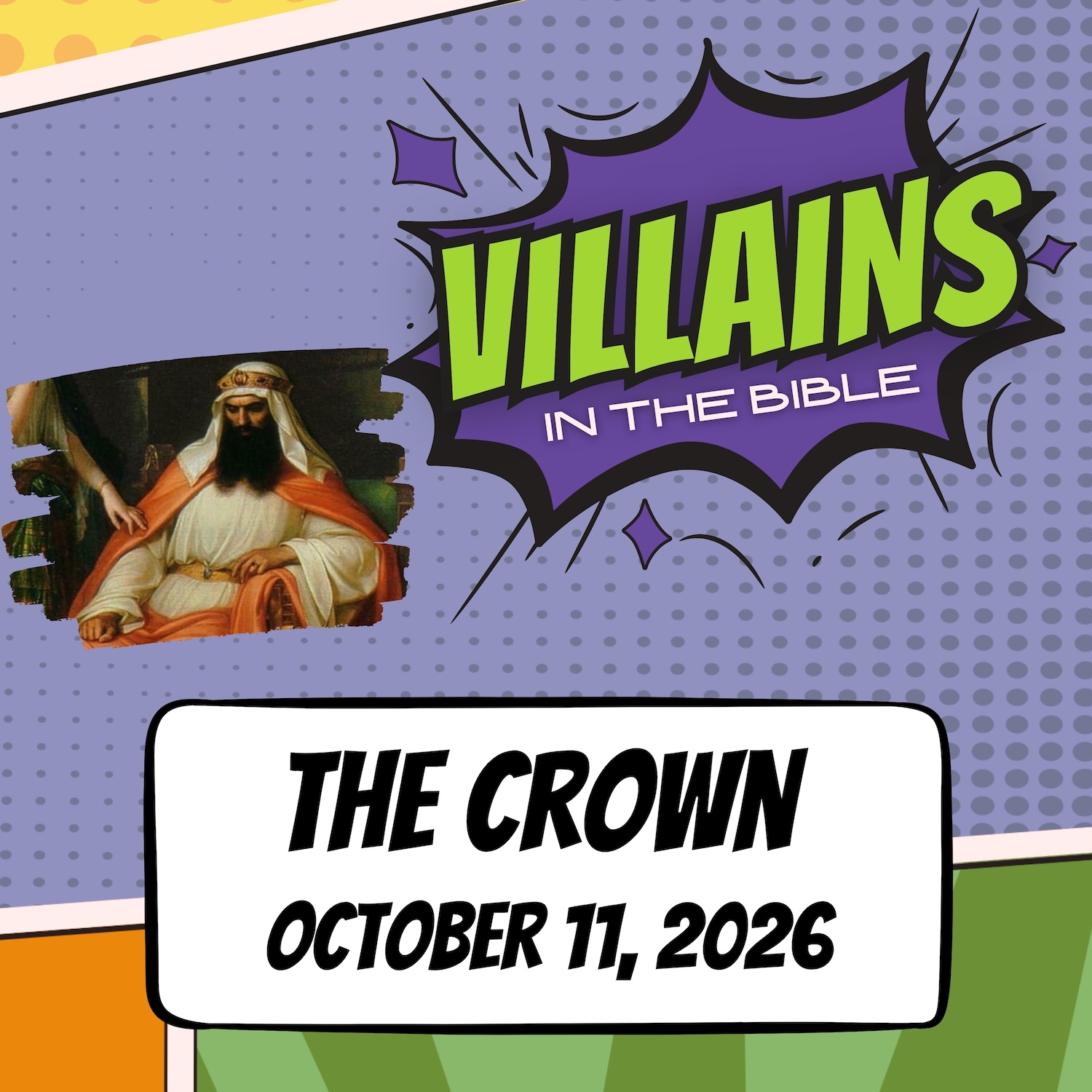
 As we pass the halfway mark in “Villains in the Bible” series (from Church Anew), we move to the New Testament to encounter a king so afraid of losing his throne that he’s willing to commit awful violence to hold onto it. In contrast to the terror of King Herod, Jesus offers an alternative vision of a kingdom, a kingdom built on humility and love.
This week’s Scripture readings are Philippians 2:3-8, Psalm 146, and Matthew 2:1-18. A few pieces of this week’s message are borrowed from my January 1, 2023 sermon on the Massacre of the Innocents. I also quote twice in this sermon from Pastor Derek Tronsgard’s sermon prompts commentary included in the Church Anew resources.
Here’s the sermon podcast audio and the livestream from Christ the King, which includes this year’s dedication of quilts and kits from our congregation for Lutheran World Relief. We dedicated 51 quilts and 91 baby care kits from Christ the King, as well as 78 school kits assembled this summer as a service project at our joint “Do Something Superheroes” VBS.
Powered by RedCircle
Grace to you and peace from God our Father and our Lord Jesus Christ. Amen
A few weeks ago when we started this series on villains in the Bible, the first characters we looked at were Adam and Eve.
The villain in that story was the serpent, right? And the serpent’s playbook was to make them question what they were missing, to play on their insecurities. The villain whispers, “You’re not enough, you’re missing out.”
Instead of trusting God to provide, instead of believing God when God looks at them and the rest of creation and declares it is good, Adam and Eve look for more. It’s not enough to have God as their source of life; they want to find something more.
I think that theme carries through all the stories of all these villains, especially King Herod in today’s story. Herod is so insecure, so worried about losing his power that he destroys the lives of the people around him.
Herod’s story is confusing because there are six different King Herod’s mentioned in the Bible (and they’re all villains), but we’re talking about Herod the Great, the one in the Christmas or Epiphany story. He’s remembered as “the Great” not for his morality, but because of his building projects.
Just to give you an idea of where we are in history, Herod’s father was an ally of Julias Caesar, and when Herod was in his twenties, Caesar appointed him governor of Galilee.
I’m going to try to not get bogged down in the history here, but last week we talked about King David, the second king of Israel. Well, now we’re about a thousand years later. Israel had some good kings and some bad kings, but they were always a pretty small nation, and between David and Herod’s time, they were conquered by the Assyrians, then they were conquered by the Babylonians, and then by the Greeks.
The Jewish people won their freedom and were independent for about 130 years under Maccabean kings, and then the Romans conquered them in 63 BC, there’s more fighting, and then the Roman Senate appoints Herod to be the king of the Jews in 40 BC. (See Wikipedia’s entry for Herod the Great if you want to dig more into his story.)
Herod was half-Jewish, and his loyalty was to the Roman Empire, not the people of Israel. No one really sees him as the legitimate king, so his position is always at risk.
He tried to win over the Jews by rebuilding the temple in Jerusalem, but people still didn’t trust him. He married a princess named Marianme from the line of the Jewish Maccabean kings, but then he grew paranoid that the people liked her better than him and thought she was plotting against him, so he executed his wife and children. Herod the Great did not tolerate threats.
Then one day, a group of foreigners from the east show up at his palace in Jerusalem, asking, “Where is the child who has been born king of the Jews? For we observed his star at its rising, and have come to pay him homage.”
Derek Tronsgard writes, “Knowing the full story paints the full picture of why this would be an incredible threat to Herod. From the beginning of the Gospel, Matthew is setting up Jesus to be the anti-Herod – the true King of the Jews.” The first thing Matthew tells us about Jesus after his birth is that he is a political threat to the people with power.
The villain will do anything to protect his power, so Matthew says Herod orders the murder of all the boys under age two in the region of Bethlehem. Sounds like what the Pharaoh did back in Moses’ story, doesn’t it?
This is an awful story. It’s hard to imagine this happening. It’s hard for me even to talk about this story, because I can’t imagine what I’d do in this situation as a parent, and also because it seems so unlikely, so ancient and foreign. But we know powerful people do terrible things when they feel threatened.
Herod is a tyrant dealing with a threat. I’ve made this comparison before, but look at our world today, at the suffering being caused right now in Ukraine by a tyrannical leader afraid of losing his power, afraid to back down.
We don’t have any particular historical evidence of this specific incident, but it’s entirely plausible, right? And we wouldn’t actually expect to have archaeological evidence, as Herod’s death squads would likely only have found around 20 children to kill that day around the small town of Bethlehem. Tragic, but only the tiniest historical footnote. And that’s even more tragic.
Jesus is born into a world of violence and tyranny. We have plenty of examples we can point to throughout history of wars caused by people afraid of losing power, people whose insecurities drive them to destroy the people around them.
This is the way of empire, right? Protect your power against enemies. This is why the Romans use crucifixion to get rid of their enemies, executing them in public as a warning: This is what happens when you threaten our power. That’s what happens to Jesus. This is not a joyful, uplifting story, but there’s a lot of truth in it.
And Jesus gives us an alternative to Herod. Philippians 2 calls us as followers of Jesus to do nothing from selfish ambition or empty conceit, but in humility regard others as better than yourselves. Let each of you look not to your own interests but to the interests of others. That’s the opposite of Herod.
Tronsgard writes, “In [Herod’s] kingdom, power must be secured, threats must be eliminated, fear justifies violence, and control means survival. God’s Kingdom is the contrast. Here, power isn’t taken – it’s given as a free gift. Enemies are loved rather than eliminated. Fear is not the driver – hope is. Trust replaces control.”
In a few minutes, we’re going to dedicate the quilts and baby care kits we’re sending to Lutheran World Relief. Many of those kits will likely end up in refugee camps. The quilts we send might be used for bedding, but they also make great walls when you’re living in a camp.
The school kits we made this summer will go to children both to help them learn and to remind them that there are people on the other side of the world who are on their side.
I didn’t plan for this to line up this way, but part of the hope I see in this awful story is that Jesus knows what it is to be a refugee in a cruel, violent world. God is present with people fleeing violence. There are people right now fleeing from oppressive governments, from wars, from famine, from gang violence, from climate change, from rockets hitting apartment buildings. This is the world Jesus enters.
As the body of Christ, we get to play a small part in reminding some of those people of God’s love for them. We as Christians are meant to follow the example of the people who provide safety to Jesus and his family as they flee oppression. We’re meant to look to the interests of others, standing up against the empire’s lust for violence and power.
And Herod’s oppression doesn’t last forever. Listen to the next two verses from Matthew: “When Herod died, an angel of the Lord suddenly appeared in a dream to Joseph in Egypt and said, “Get up, take the child and his mother, and go to the land of Israel, for those who were seeking the child’s life are dead.”
Psalm 146 tells us, “Put not your trust in rulers, in mortals in whom there is no help. When they breathe their last, they return to earth, and in that day their thoughts perish.”
Instead, in a world that can seem awfully full of villains and violence, our hope is in the Lord—verse 7—“Who gives justice to those who are oppressed, and food to those who hunger. The Lord sets the captive free…The Lord cares for the stranger; the Lord sustains the orphan and the widow, but frustrates the way of the wicked.”
As followers of Jesus, we see this when we look at the cross. The cross is the ultimate symbol of oppression, the Roman Empire’s way of maintaining their power.
Threats get killed in this horrible, brutal, public way. But Jesus transforms the cross into a symbol of hope. The cross is emptied of its power, because it’s not enough to end Jesus’ story. Oppression and violence are overcome by love and hope. The Lord frustrates the way of the wicked.
Please pray with me.
God of love, thank you for entering into our broken world. Thank you for the ways your Holy Spirit is working for good, stirring us to love our neighbors, to trust in you for life. When we are tempted by power at the expense of our neighbors, remind us we are citizens of your eternal kingdom, followers of the prince of peace. As the nations rage around us, help us to remember you are present with us, holding us fast. Jesus, we trust in you for life. Amen
Villains in the Bible Series
Week 1: The Serpent
Week 2: The Pharaoh
Week 3: The Fallen Hero
Week 4: The Crown
Pingback:Villains in the Bible: The Pharaoh | September 27, 2026 - Pastor Daniel Flucke
Pingback:Villains in the Bible: The Serpent | September 20, 2026 - Pastor Daniel Flucke